Free SEO report examples and PDF samples
8 complete synthetic report samples. Inspect the real first-page preview, open or download the PDF, and choose the report job before moving into an editable template or browser-local generator.
- Preview
- Real first page from each PDF
- Format
- Complete downloadable PDF
- Boundary
- Synthetic structure, never client performance
- Next step
- Editable template or local generator
No signup and no upload. The previews show original, synthetic reports; replace every business name, metric, finding, and owner before client use.
Choose the report job
Showing all 8 resources. Filters stay on this page and create no indexable URLs.
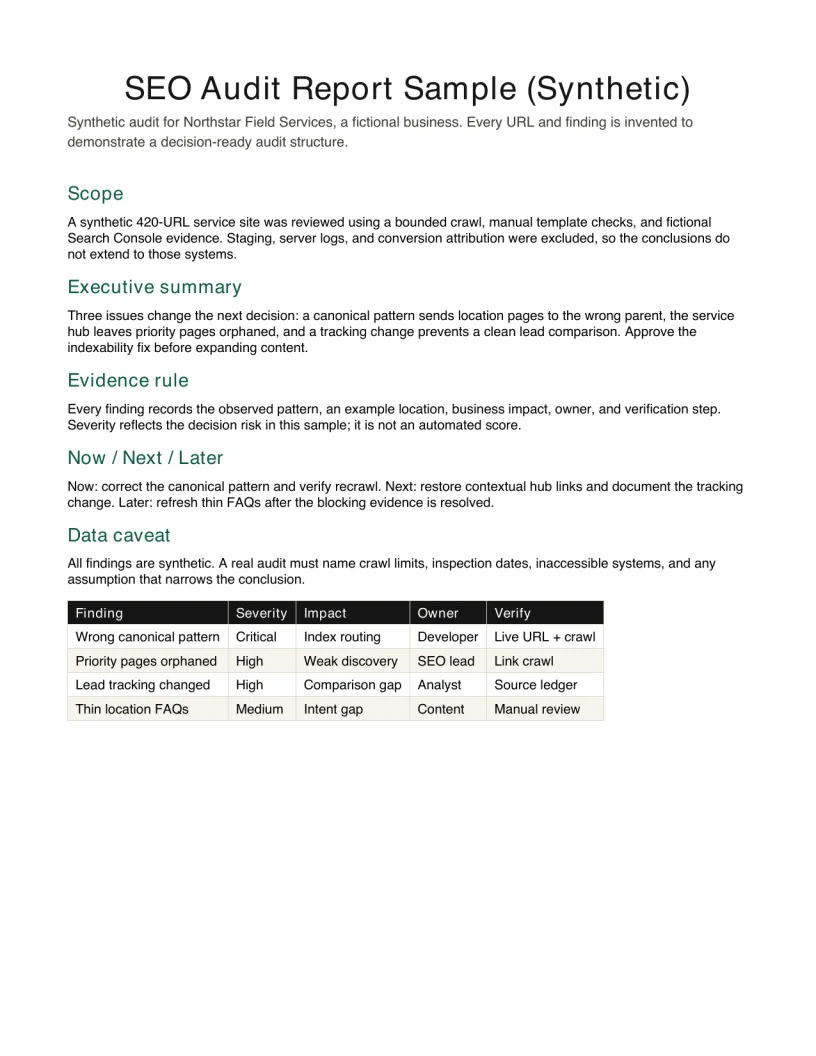
Inspect an audit report
See scoped evidence, severity, owners, and a phased roadmap.
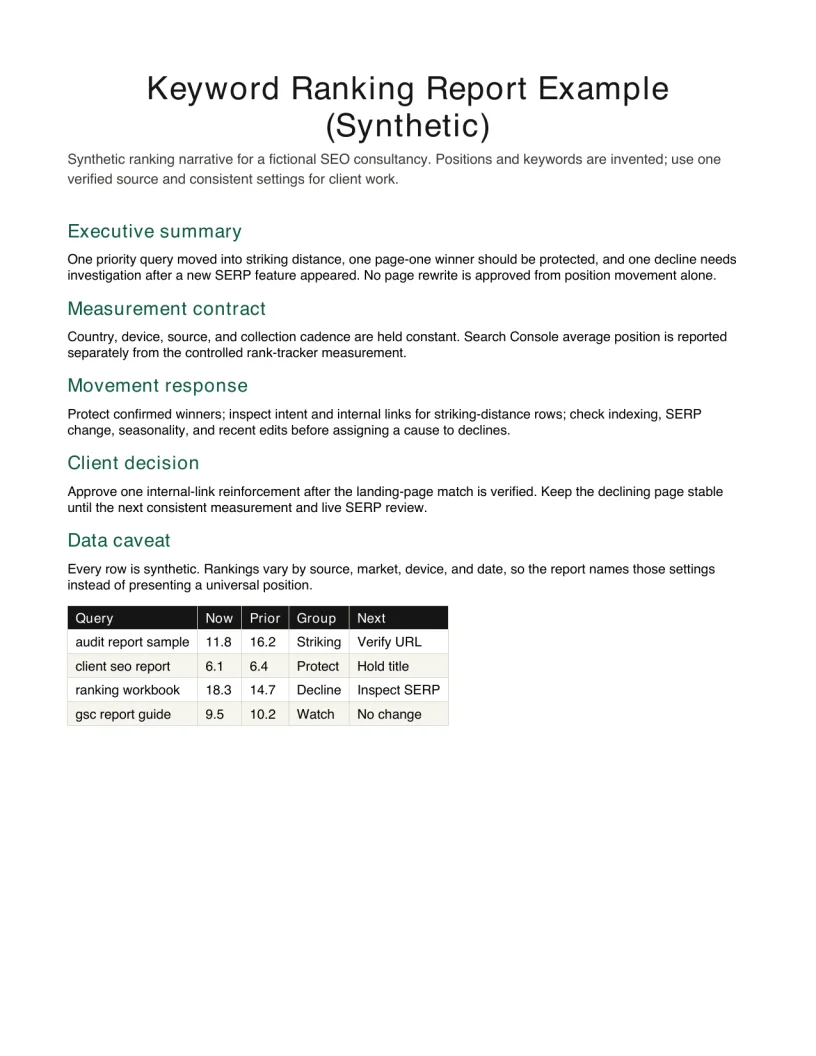
Inspect a ranking report
See movement, SERP context, confidence, owners, and next actions.
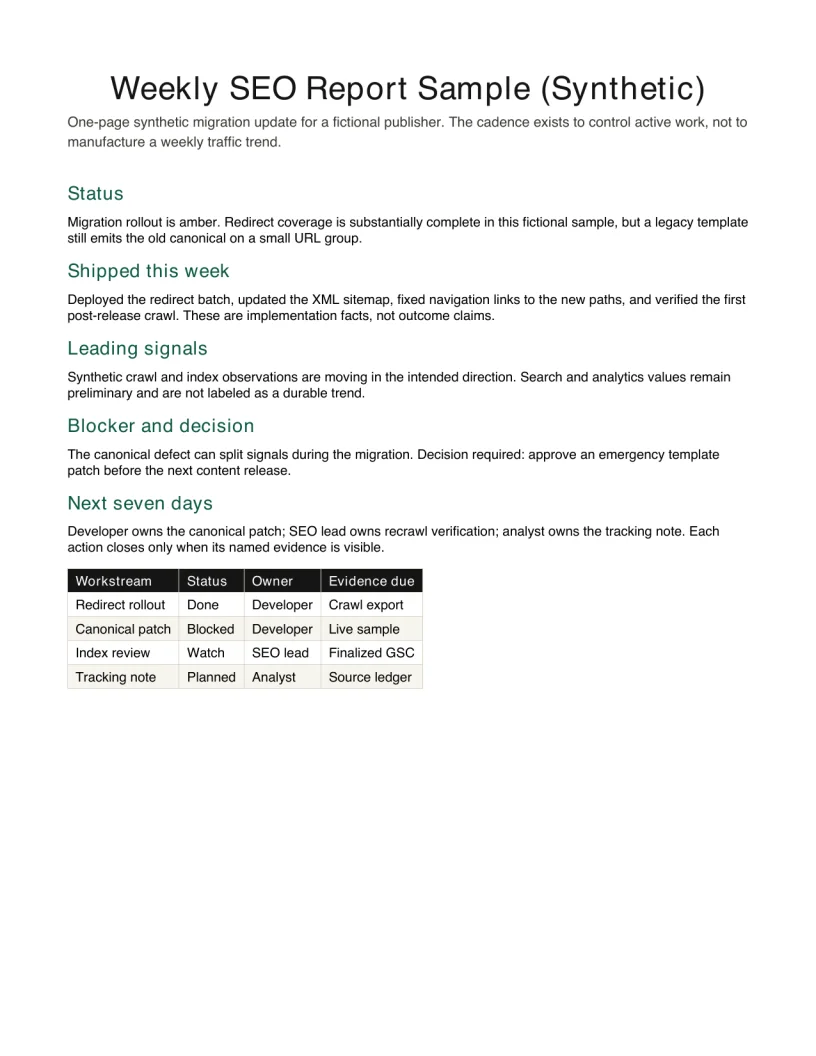
Inspect a weekly update
See shipped work, leading signals, blockers, decisions, and owners.
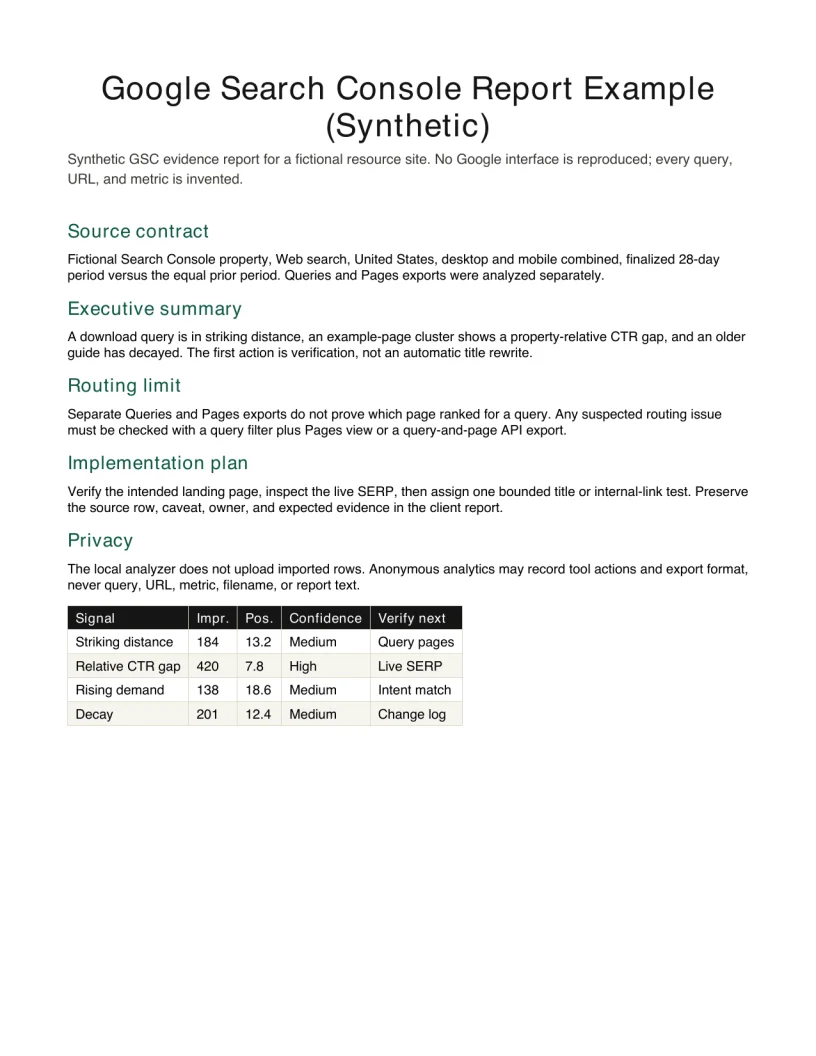
Inspect a GSC opportunity report
See query-page evidence, verification limits, and prioritized actions.
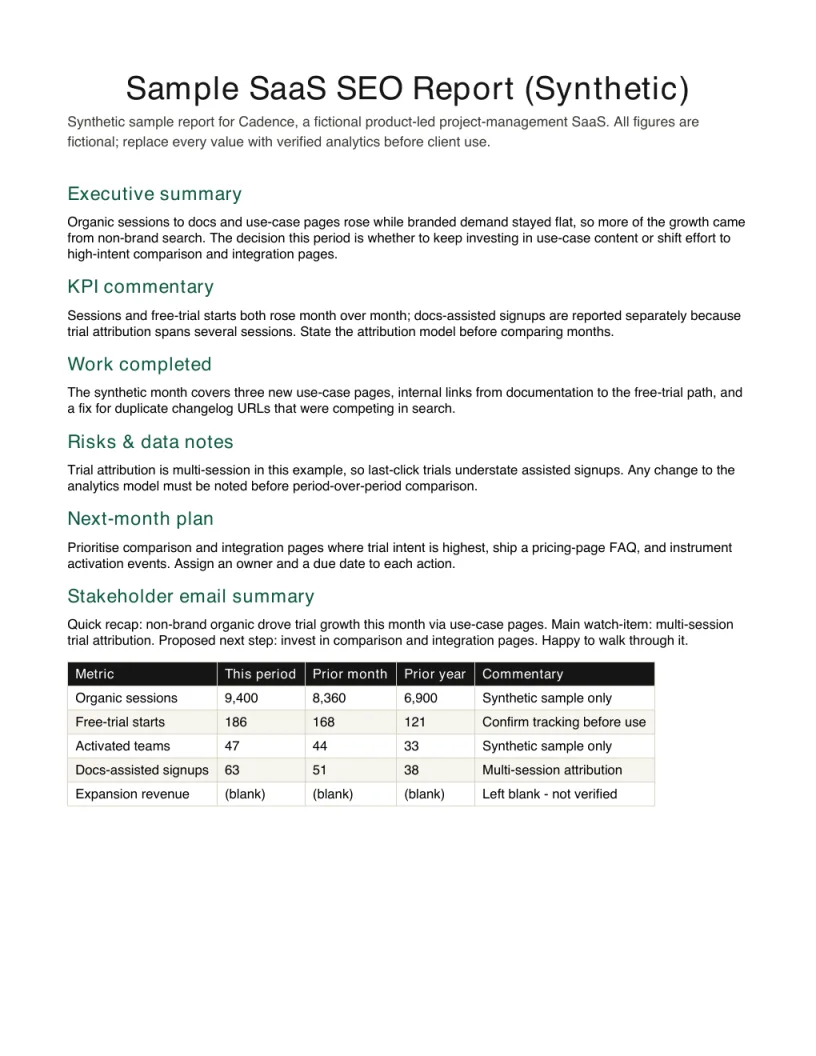
Inspect a SaaS SEO report
See rankings, pipeline evidence, technical work, and decisions together.
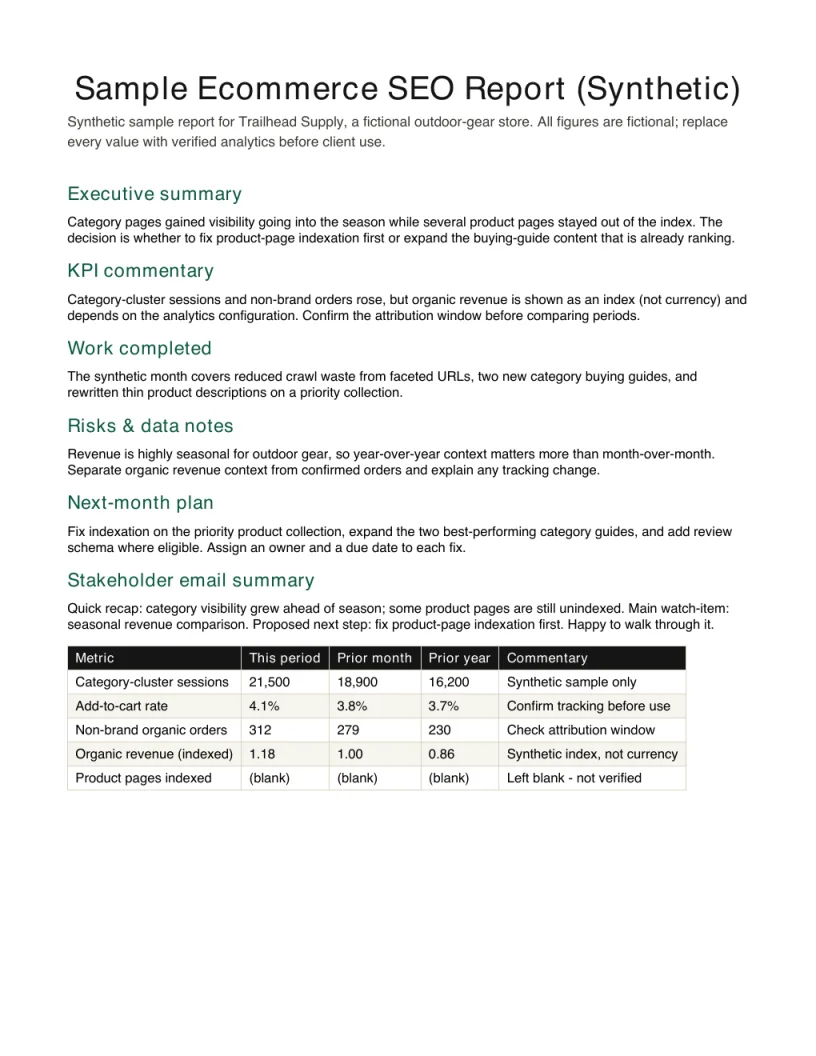
Inspect an ecommerce report
See category visibility, product-page issues, and owned next actions.
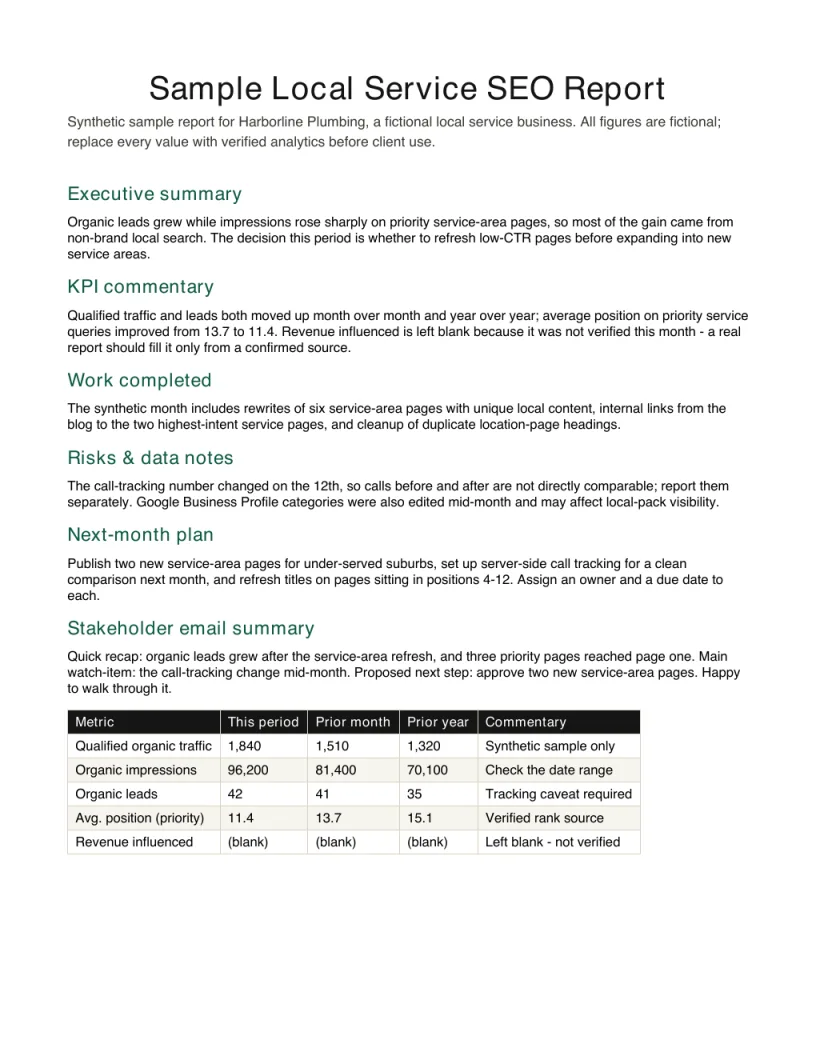
Inspect a local SEO report
See how service visibility, calls, leads, and next actions fit one page.
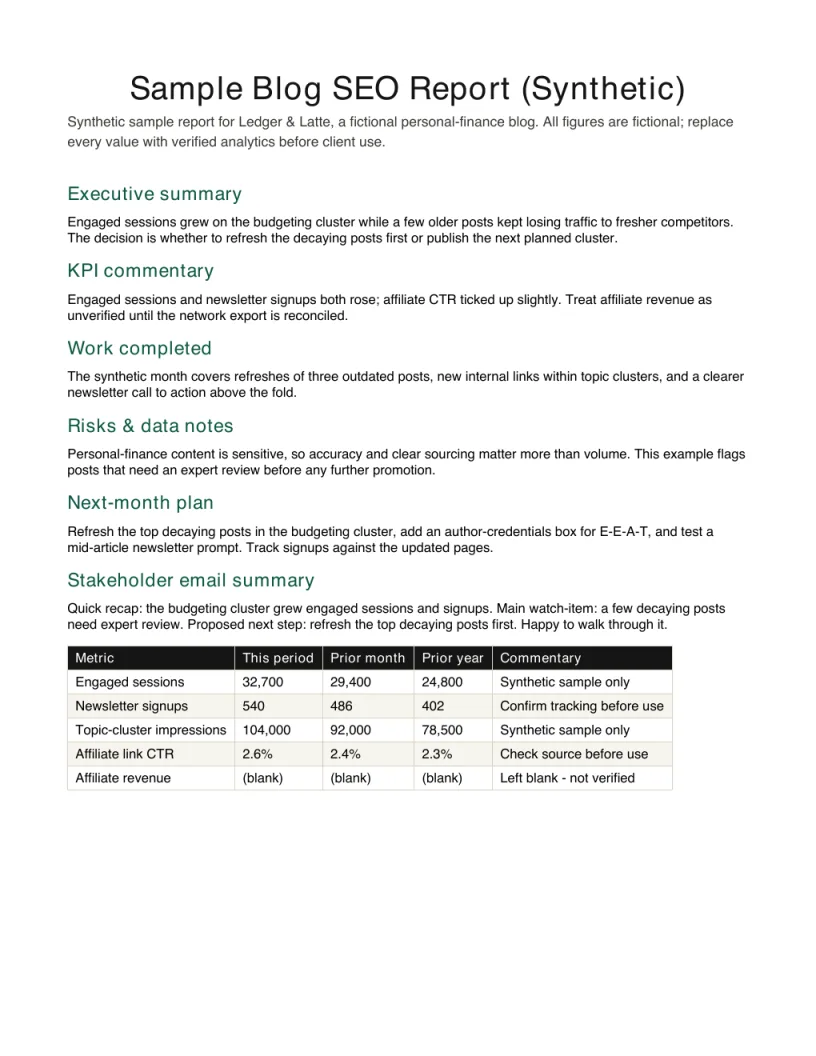
Inspect a content report
See topic clusters, decay, internal links, and refresh priorities.
Pick the resource that finishes your next job
Each row has one primary task and one maintained URL. Filters change this view only; they never generate sitemap entries or crawlable result pages.
| Resource | Job to be done | Format | Best for | Next step |
|---|---|---|---|---|
| SEO audit report sample | Inspect audit findings | Client | Open | |
| Keyword ranking report example | Explain ranking movement | SEO team | Open | |
| Weekly SEO report sample | Share a weekly update | Stakeholder | Open | |
| Google Search Console report example | Explain GSC evidence | Client | Open | |
| SaaS SEO report example | Inspect a finished report | SaaS | Open | |
| Ecommerce SEO report example | Inspect a finished report | Ecommerce | Open | |
| Local SEO report example and template | Inspect a finished report | Local business | Open | |
| Blog SEO report example | Inspect a finished report | Publisher | Open |
Use the sample, then replace the evidence
- 01Choose the closest report example
Match the business model and study how the summary turns metrics into a decision.
- 02Open the editable template
Use the same section order, then remove every synthetic row.
- 03Prioritize verified GSC evidence
Analyze your Search Console export locally before choosing the pages and queries to discuss.
Using examples in client work
Reading a finished report is the fastest way to learn how to write one, so this section combines four industry examples with four structurally different deliverables: an audit, a ranking narrative, a weekly operational update, and a Search Console evidence report. Each uses a fictional company and synthetic sample data, so you can study the structure and commentary without exposing a real client's analytics.
Look at how each example explains movement rather than listing it. The KPI commentary names the likely cause, states the confidence level, and connects the number to a decision the client has to make — approve the next sprint, keep funding a content track, fix a technical issue. The next-action sections show how a report becomes a scope tool for the following month instead of a backward-looking metric dump.
Use these as a model for tone and shape, not as numbers to copy. Keep the sentence patterns — the way a risk is flagged, the way a win is qualified — but replace every figure with your own verified data. The point of a worked example is to make the blank page less intimidating, not to supply borrowed statistics that would be indefensible in your client's context.
Examples FAQ
Are these real client reports?
No. Every example uses a fictional business and synthetic sample data. They show realistic structure and commentary without exposing any real client's analytics or performance.
Why are the numbers synthetic?
Because the value of an example is its structure and the way it explains movement, not its figures. Synthetic data lets us show a complete, realistic report while keeping the discipline of never publishing unverified or borrowed metrics.
Can I use an example as a starting template?
Yes. Copy the structure and the commentary patterns, then replace the fictional business and every number with your own verified data. Pair an example with the matching report template to move from model to working file.
Which example should I read first?
Choose by client context or by task. The four industry samples cover local service, SaaS, ecommerce, and publishing; the audit, ranking, weekly, and GSC samples show structurally different deliverables when the job matters more than the industry.
Do the examples show what to do when data is missing?
Yes. Each one includes risk and data-note sections that flag tracking changes, seasonality, or gaps — exactly where a report should make uncertainty visible instead of papering over it.