How to create an SEO report
How to create SEO report drafts fast: free, original templates and a local browser generator with synthetic sample data and KPI commentary, no signup needed.
Original, synthetic sample data only. Every figure in this asset is a worked example — replace each sample value with your own verified analytics before sending a client report.
A practical way to build an SEO report
Most SEO reports fail in the same way: they export everything and explain nothing. This guide walks through a reporting process that produces a document a client will actually read — built around decisions, written in plain language, and honest about what the data does and does not show. It assumes you are reporting on real client work, so it focuses on judgment and structure rather than on which buttons to press in a tool.
The steps below work for a monthly retainer update, a one-off audit summary, or a quarterly review. The format changes; the discipline does not.
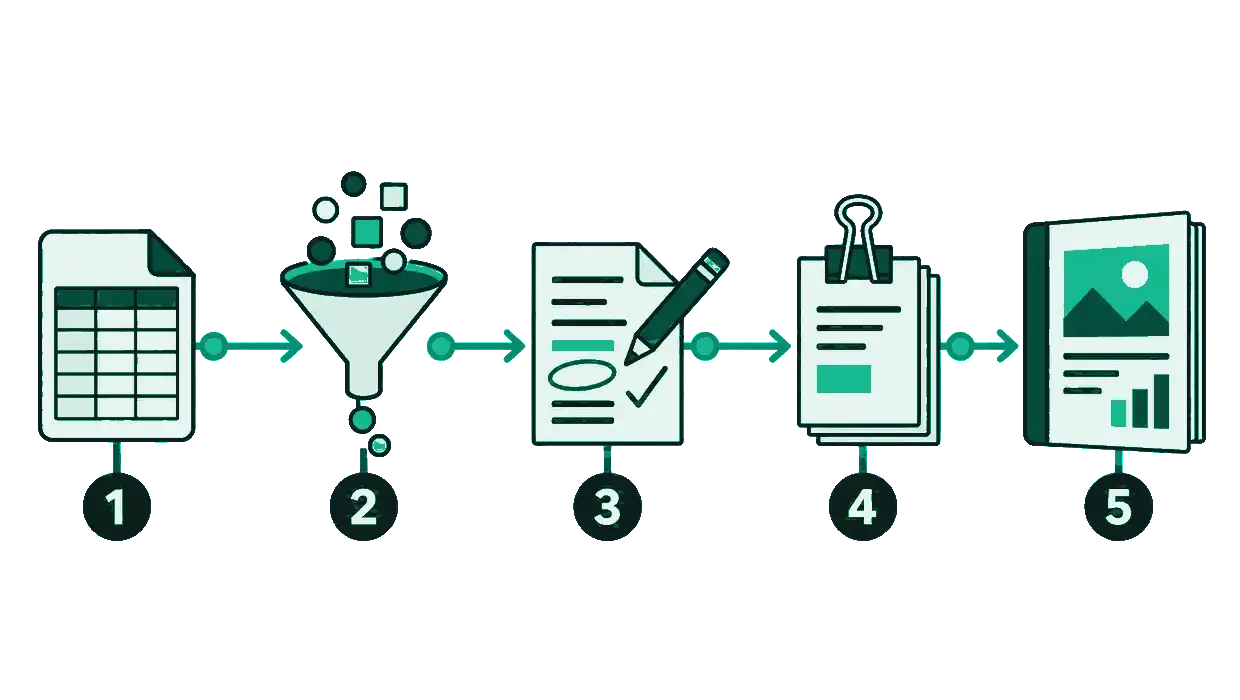
Five steps from data to decision
Work through these in order. Each step narrows the report from everything you could say to the few things worth saying.
- Step 1 — Define the decision. Write the one decision this report should drive before you open any tool. Everything that does not help make that decision is a candidate for the appendix.
- Step 2 — Gather verified data. Pull your own analytics, Search Console, and crawl exports. Note the date range and any tracking changes now, so you do not misread a comparison later.
- Step 3 — Choose the KPIs that matter. Pick the handful of metrics that inform the decision — usually qualified traffic, conversions, and visibility — and leave the rest out of the main report.
- Step 4 — Write the commentary. For each movement, write one plain sentence: what changed, the likely cause, your confidence level, and whether it was expected.
- Step 5 — Set next actions. End with a short list of owned, prioritized actions, each tied to the evidence the next report should show.
Common mistakes to avoid
Most credibility problems in SEO reporting come from a small set of habits. Avoiding them does more for client trust than any chart.
- Claiming sole causation: tying every ranking change to your work, with no room for seasonality or algorithm updates.
- Estimating into blank cells: presenting a guess as a measurement instead of leaving the value empty.
- Reporting volume over meaning: pages of metrics with no interpretation of what the client should do.
- Copying third-party dashboards: pasting screenshots of analytics or rank-tracker UIs into a client-facing file.
Turn the guide into a deliverable
Once the process is clear, use a fixed structure so you are not rebuilding the document every month. The free SEO report template here follows the same five-step logic, the monthly KPI guide helps you choose what to include, and the sample reports show how the commentary reads when it is done well. Pick the asset that matches the engagement and adapt it with your verified data.
How to create an SEO report FAQ
What should an SEO report actually contain?
A short executive summary, the few KPIs that inform the client's next decision, the work you completed, and prioritized next actions. Detailed tables can live in an appendix. The body of the report should be readable in a couple of minutes.
How do I explain a bad month in an SEO report?
State it plainly, give the most likely cause, and separate what you control from what you do not — seasonality, algorithm updates, or tracking changes. Then show the next actions. A clear explanation of a down month builds more trust than a good month with no commentary.
How long should an SEO report be?
Shorter than the export it is based on. A focused monthly report is often two to four pages of narrative plus an appendix. If a client has to scroll to find the recommendation, the report is too long.
Which tools do I need to create an SEO report?
Whatever you already use for analytics, Search Console data, and crawling. This guide is tool-agnostic: the structure and commentary matter more than the source. The free template here works regardless of which analytics or rank-tracking stack you report from.
How do I keep an SEO report from becoming thin content?
Add interpretation. The valuable layer is not the exported number; it is the sentence explaining what changed, why, and what happens next. A report that interprets three metrics well is stronger than one that lists thirty without comment.